

AI marketing automation: Introduction
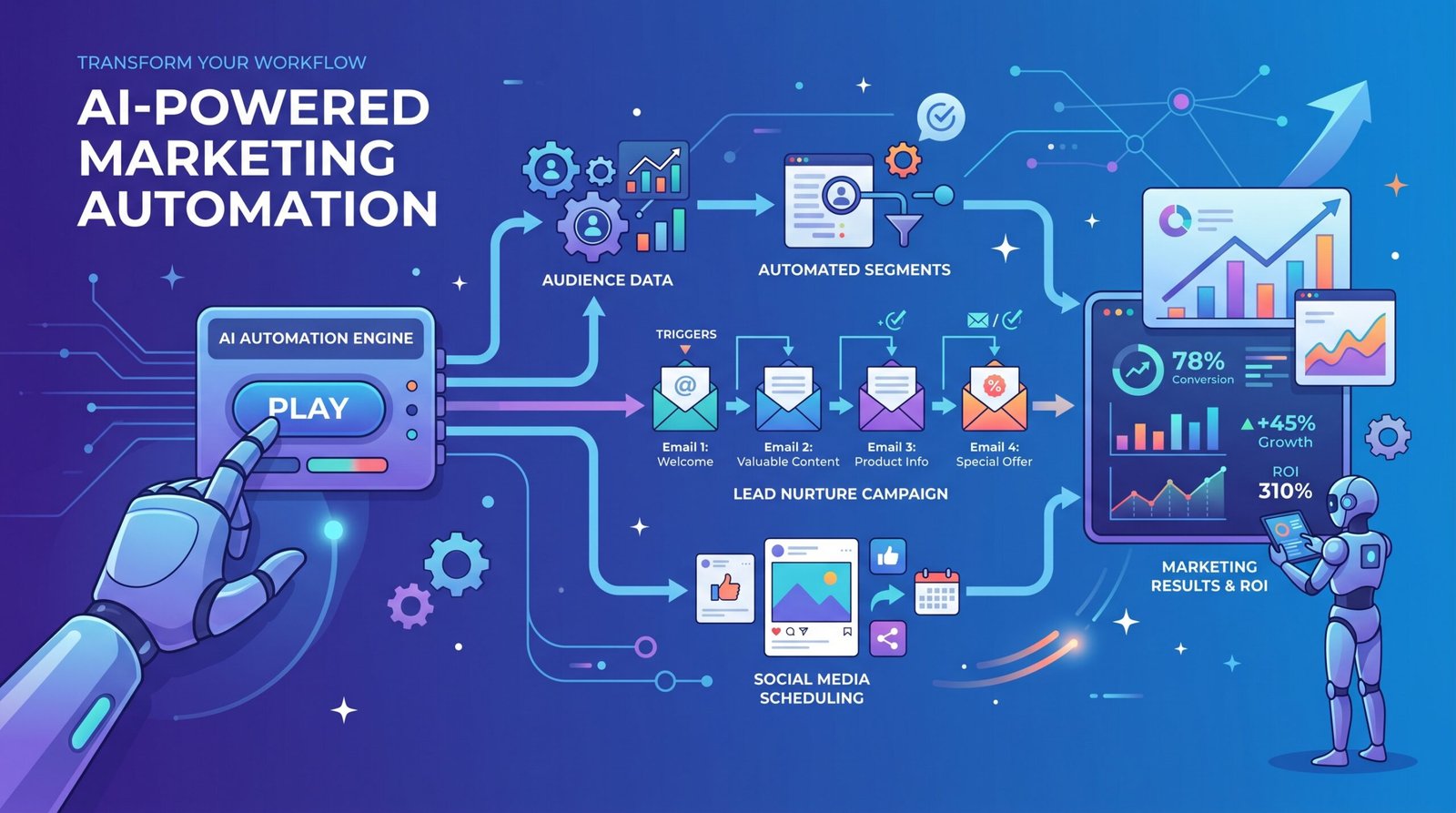
Marketing automation has been around for years, but AI has taken it to an entirely new level in 2026. AI-powered marketing automation goes beyond simple trigger-based emails and scheduled posts. It enables intelligent, adaptive campaigns that learn from customer behaviour and optimize themselves in real time. This guide covers everything you need to know about implementing AI-powered marketing automation for your business. Understanding AI marketing automation is essential for businesses looking to stay competitive in 2026. At Digital Foxz, we help businesses achieve their marketing goals.
What is AI-Powered Marketing Automation?
AI-powered marketing automation combines artificial intelligence with traditional automation tools to create smarter, self-optimizing marketing workflows. While traditional automation follows fixed rules (if X happens, do Y), AI automation learns from data, predicts outcomes, and adjusts strategies automatically.
Key Benefits of AI Automation
The benefits are substantial: reduced manual workload, higher conversion rates, better customer segmentation, and improved ROI. AI automation can analyze thousands of data points to determine the best time to send an email, the optimal subject line for each recipient, and the most effective channel for each customer. Businesses using AI-powered automation see up to a 45% increase in lead conversion rates.
1. Intelligent Email Sequences
AI takes email marketing beyond basic drip campaigns. Modern AI tools analyze open rates, click patterns, and engagement history to dynamically adjust email content, send times, and frequency for each subscriber. Tools like HubSpot AI, ActiveCampaign, and Mailchimp now offer AI-powered send-time optimization and predictive content recommendations.
2. Predictive Lead Scoring
One of the most powerful applications of AI automation is predictive lead scoring. Instead of manually assigning scores based on simple criteria, AI algorithms analyze hundreds of behavioural signals to predict which leads are most likely to convert. This enables sales teams to prioritize their efforts on the highest-value prospects.
3. Dynamic Content Personalization
AI automation enables real-time content personalization across your website, emails, and ads. Based on a visitor’s behaviour, location, device, and past interactions, AI can dynamically change headlines, images, offers, and CTAs to maximize relevance.
4. Automated Social Media Management
AI tools like Buffer, Hootsuite, and Later now offer AI-powered content scheduling, hashtag recommendations, and optimal posting times. They can analyze engagement patterns and automatically adjust your posting schedule for maximum reach.
5. AI Chatbots for Customer Journey Automation
AI chatbots are the frontline of marketing automation. They can handle initial customer inquiries, qualify leads, book appointments, and even process orders—all without human intervention. Modern AI chatbots learn from every interaction, becoming more effective over time.
Getting Started with AI Marketing Automation
Start small. Pick one area—email automation, lead scoring, or chatbots—and implement AI tools there first. Measure the results, learn, and expand. Most marketing platforms now offer built-in AI features, so you don’t need a separate AI tool.
Conclusion
To sum up, AI-powered marketing automation is transforming how businesses engage with customers. By automating repetitive tasks and delivering personalized experiences at scale, AI frees up your team to focus on strategy and creativity. In 2026, marketing automation is not a luxury—it is a competitive necessity.
For more insights, check out Gartner’s latest marketing research and Google Search Central.
⚡ Ready to automate your marketing with AI? Digital Foxz helps businesses implement smart automation strategies that drive real growth. Let’s build your automation roadmap!